Physical Address
304 North Cardinal St.
Dorchester Center, MA 02124
Physical Address
304 North Cardinal St.
Dorchester Center, MA 02124
[ad_1]
Market magazine33:0650 years ago, Khmer Rouge began the power of terror in Cambodia. Justice is abducted
WARNING: This article includes references to genocide and extreme violence.
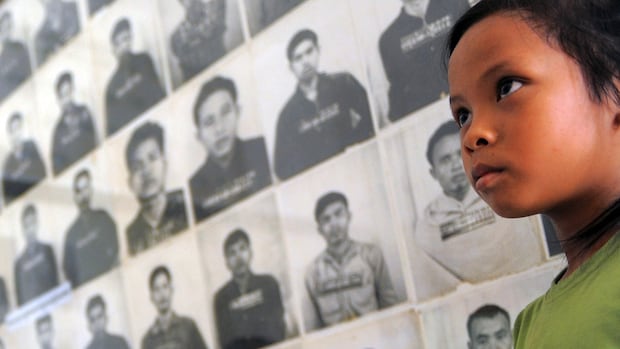
Bokhara was 50 years since Bokhara climbing a tree and corruption in Penh. When Khmer Rouge seized Cambodia, the period remains alive in the mind.
Welcoming black-secret soldiers, the early remembrance of the hopeful citizens, in a fierce house accident, went to the memories of the eyelid in the eyelid.
After Horror, the horror of change of life, after the soldiers, cut the families and killed them. Even the remaining kids were punished as a traitor for the palm tree handle instead of bringing the “stealing” or community tree tree to community camps.
“You see, you see but you can’t touch, you can’t eat … (Because), now you do not share food with the rest of the Communal,” Bun now live in Gatineau. Market magazine.
One of his sisters was caught in this situation and brutally beaten to the point of constant brain injury. They had to watch their parents and older sisters but they could not intervene. Any problems meant to execute the whole family.

On April 17, 1975, Zero, Khmer Rouge and Leader Paul Tengini, the nation, traditions and people in a new communist society for a new communist society for a new communist society.
Today, people with survivors and Cambodia affect the rule of Khmer Rouge’s approximately four-year rule – especially how the driver’s poloke and the highest leaders helped.
This is a liability of how the justice refugees today.
In the mid-1970s, Cambodia Kambodia, a widely studied in Khmer Rouge organization, documented and written, according to Craig Etcheson, Cambodia was deep.
In the neighboring Vietnam War, the US military commander-politician, especially targeting the foundations and supply lines of the United States, was exposed to a half-year dictatorship.
Khmer Rouge sold people ineeaguered by changing the change: “A new communist party (previous communist parties) made a new communist party,” said Etcheson.

Instead, disaster occurred.
The cities were largely abandoned, residents, residents reorganize village labor groups, Cambodia classless, utilities, agrarian society.
The regime closed schools, money, land property and traditional family institutions, destroyed the prohibited religion and temples and works of art.

Targets for persecution and execution are widespread: Ethnic and religious minorities, artists, doctors, lawyers, teachers and people were considered intellectually as people who wear glasses or speaking glasses or speaking glasses or speaking glasses.
“They destroyed the Cambodian culture until the roots. They destroyed the country’s economy and all institutions. In the emergency rooms in the Cambodia (ECCC) courts, Cambo and International Court were asked in a Cambodia and International Court to seek the justice of Khmer Rouge.
The regime was overthrown in early 1979, but the suffering continued. Cambodians continued to oppose the Members of the Khmer Rouge, which followed him to reconstruct the nation in the 1980s and 1990s.
The 1990s was a period of the collapse of the Soviet era, the fall of the Berlin Wall and damaged conflict in the Balkans and Rwanda.
Along with these events, it was a new collection in the landscape of foreign policy and reminiscent of Lloyd Akheyni, a Canadian Foreign Minister in 1996-2000.
In this background, the United States approached Canada in 1997 with a proposal: The “Required Trial” for the “Required Court” for the Khmer Rouge leader “A” Algat and Captance mission “was approached.
Canada was struck as a potential partner according to his own law, allowing the extradition and / or trial of war crimes or humanity against humanity. After a broad legal analysis, Canada decreased, Axworthy said.
“At that time, the warning was the word,” said Ahvin.
But another factor was Canada Failed event against Imre Fintadded. This World War II time, Hungarian police captain settled in Canada After convicts of thousands of Jews for helping to send to concentration camps.

“All (poll Pot) fell all the ideas to bring justice and regret it … but I learned from it,” said Aykeyn. “I think that is the more impetus to participate in the development of the International Criminal Court.”
During the next year, Paul Pot, the main trial of the Roman Key Court, who died for natural reasons in the Thailand-Cambodia border camp, was adopted by the member countries of the world all over the world.
Axworthy describes a strongest rule on the principle of “legal and individual accountability” for the most serious international crimes “the principle of individual accountability” for the most serious international crimes. “
According to him, he hoped to prevent future atrocities.
If the court had already been established, Paul could have usurped and “brought together like the Hague” Ahvin Mused. “The court actually gives us a vehicle that does not need.”

At the same time, the Cambodian management – the United Nations helped – Khmer Rouge began to move forward in the long run to test high-level members.
Retired Ottawa Police Department Isobel Granger Other international peacekeeping missions and studies under his pipeline were already issued, when the staff of Cambodia was given in 2015. Those survivors have yet collected physical evidence for decades and set up criminal sites to make the most powerful to the surviving leaders given orders.
Often there was the first person to open a very surviving person until this period.

A woman was left behind in a truck, it was left behind to be left behind and shared a longevity. It was later learned that the killed areas fled from the trip.
Granger remembered another conversation leaving a man in his 50s, hugged as a small boy consumed by his memories.
Gigali went to Rwanda before burials and stands, the Granger, who stands, said that the survivors of the genocide of people are important to come to terms.
“Civilization Coating is very thin,” he said. “If people should actually be able to be, they should go to those places to see what can happen when you don’t see each other as human.”
After the Khmer Rouge, the next one-time Khmer Rouge was conducted by Hun Shen until ten years of Cambodia. He continues to guide the Senate of the country in 2023 in 2023.
In some sense, the Hun has allowed you to surprise international researchers for years, Etcheson, but rejoicing Khmer Rouge members to the Cambodian society, preventing the prosecutor’s efforts outside the best brass.
Eccc condemned three officers before the trial closing in 2022.
Justice, Etcheson, “It’s a very inevitable angel.”
The “court) process was a large-scale, socio-political experience to know how much justice in Cambodia. Some. Some people are not as many people want.”
In Gatineau, Bokhara, Bokhara was reflected in the people of Granger, who needed to remember the atrocities perpetually perpetuated in the homeland.
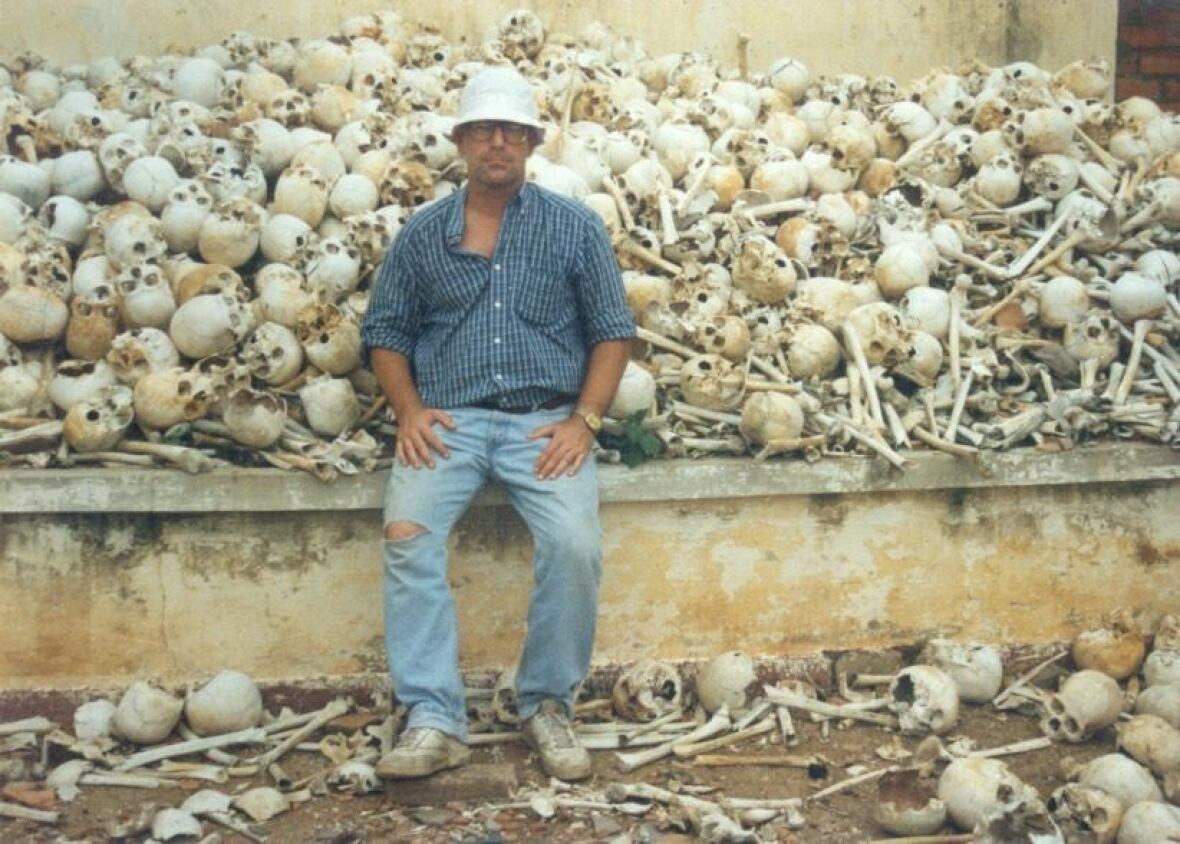
In the four years of Khmer Rouge’s four years of the kingdom, about two million to 1.5 million or more Cambodian population – families, nutrition or disease died or died.
“You have learned day by day to live and you have a fear to constantly execute,” he said. “If you hear your name, (you) already died.”

The bodies fell into a trench hidden under a tight mango tree. He was instructed with the young man and one took him to him.
It is afraid to detect on the terrible site, nonsense immediately, pulled it with him to find the water washed in the cow.
“It kills another person without regret. … Here (I) are the most scared of: This is the return of this story again,” he said.
Cambodia said “the worst hell on earth.”
“But you find justice? We lost everything.”
[ad_2]
Source link
