Physical Address
304 North Cardinal St.
Dorchester Center, MA 02124
Physical Address
304 North Cardinal St.
Dorchester Center, MA 02124
[ad_1]
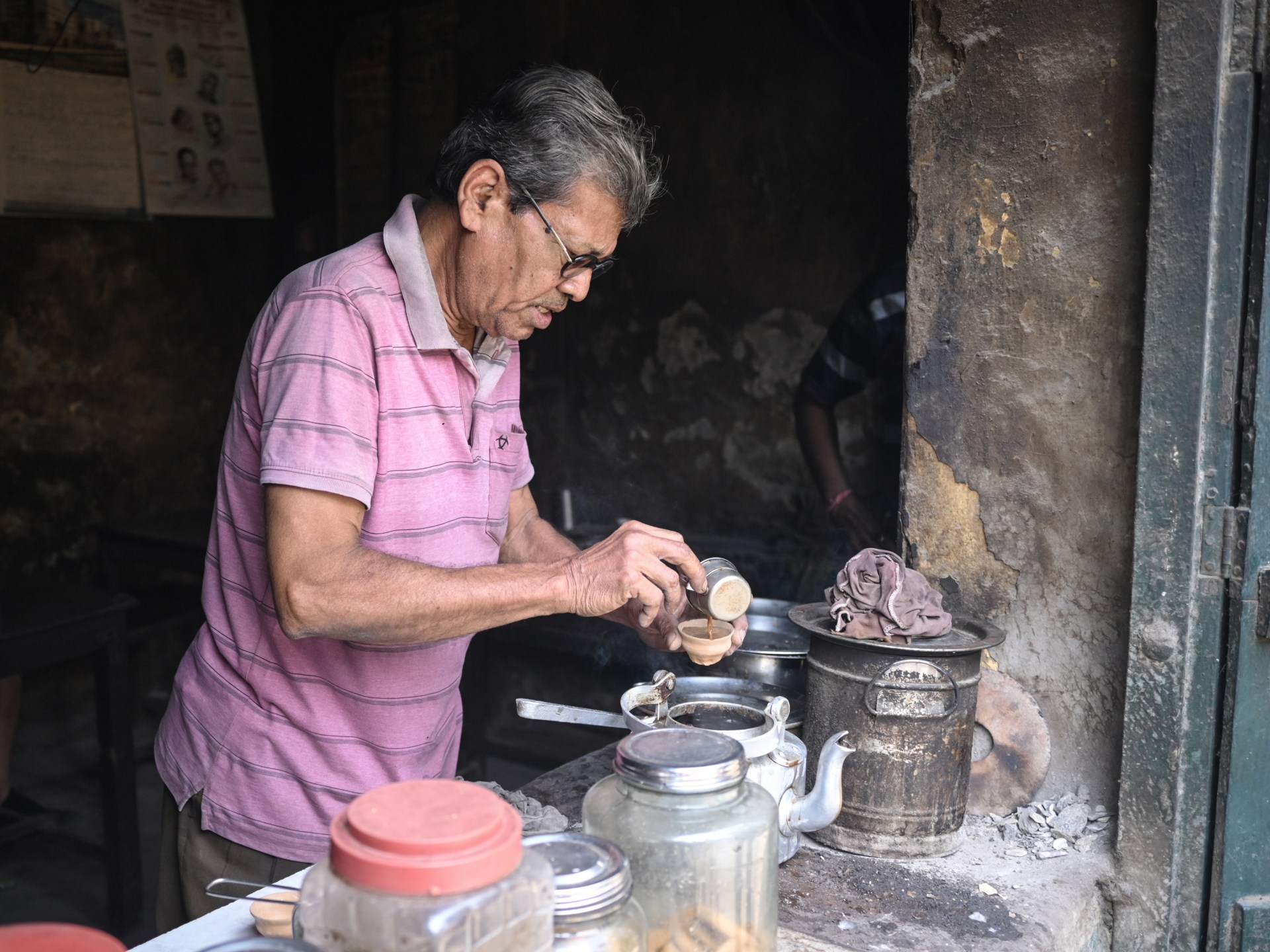
Serampape, India – In March, it is a hot morning and 65-year-old Ashish Bandopadhyay, for 10 minutes from home for 10 minutes to the river shop in the Serampore neighborhood, about 30 km (19 miles), about 30 km (19 miles) passed to a river shop.
Dressed in a pastel pink polo shirt, Ashish, today receives the liability of the shop by announcing that it was his “turn” to handle it. “I don’t work here,” a package explains a smile when opening a package (the word Bengal for tea) is preparing to brew a fresh pot. “I’m just a customer who loves an old timer and volunteers.”
This hole in this hole located in the old part of the city is known as Naresh Shomer Cha Er, Naresh Shomer Cha Er. The process of preparing and sharing tea in India is an important part of social bonds.
This tea shop is all about everything. It was a place for a century, rest, conversation and shared moments. But Social Bond leads to a step further: customers just do not drink tea and brew and serve.
Ashish, who retired from office work with a construction company, visited this tea shop because he was 10 years old. It is where you meet your friends to catch on a cup of tea.
Every week, the owner of the 60-year-old opens Ashok Chakroborty store and then goes to office work.
“In the evening, he manages our work to control the shop. Today was my turn,” he said. In general, there are 10 volunteers in the shop for seven days a week. No one is paid – most of them, like Ashish, retiring and retiring from their past employers.
Today came to the store on Ashish 9 and closed for lunch at noon. Reopened in 3. “If not every day, I prefer to stay here for the majority of the week. After my departure, I step in my role.”
There is no fixed rota – “Who is free”, “Explains the Pay.” After using it to get milk or sugar, we keep the cash in a wooden box. There was no one day without a mediator.

A five-seven-meter tea shop in small 100 years “Except for several bleaching and ceiling repairs”, Ashish notes. Despite the paint layers, the walls are darkened with smoke and smoke from the traditional clay oven with coal.
Tea is still served in clay cups, as well as papers, only five rupees (about $ 0.06).
The store offers a modest tea menu with simple, simple options. Customers can serve the milky tea – with sugar or without sugar or without black tea plains or lemon or lemon or cobiraji Cha (black tea). The cookie jars complement the shop offers.
Chatra Kali Babu’s crematorial family members in place, after farewell to relatives, often come to the tea.
The store was founded by Naresh Chandra Shome, who works for the colonial period in India, a river company, Brooke Bonda. All Ashok, the current owner, this period is that Shukhan leaves the work to become a fascination of freedom from this period.
In 1947, after the British rules, India joined the India (Marxist) Communist Party (Marxist) in 1947 and remained active until 1995.
Today, the river shop sits next door to the local CPI (m) office. “Thankfully was a helper and was active in the community service. His shop is well known in the time and now. He has a picture of his picture,” said Prashanto Bondal, 54, a regular customer in the tea store.
It reminds the store how it is brought to the store by a colleague 25 years ago.
“Serampae has many rivers’ support, but I always come here, almost every day, because of a unique atmosphere of the shop,” LPG gas delivery agent explains.
After graduating from his river, Prashanto helps Ashish fill the coal in the oven. Like Prashanto, most customers help tasks such as filling from a nearby store or crane.
“We heard the stories of Naresh Şükri during active days,” said Ashish. “I sometimes believe in the emergency community service or by the police and believe that customers look after the store.

Thankfully in about 1925, he opened the river shop on the first floor of his aunt’s own building. However, there was a collection place for tea drinkers and negotiations, a 350-year-old building on the shores of the Hooghly River is a variety of shops, including items sold.
Wooden rays in the ceiling are the weight of history. Thick limestone walls stood as many Bengali, Denmark and the English people as silent witnesses. The store looks at Chatra Ghat (steps leading to the river), Hindus cremated the dead for generations. Now a modern electrical crematorium took the place in the traditional tree pyrs.
The city of Serampore, about 200,000 people, the West Bengali capital of several centuries in several centuries, and sometimes managed by Danes and British. The city was a Danish trade settlement called Frederiksnagore until the British, until independent in 1947.
Once, the driven wagons were transported to the streets of European officers and their families. Bylanes noise today with motorcycles, electric rickshaws and cars. European style buildings are standing in the last decades together with high housing complexes.

The local recovery activist Mohit Randip explains that the river shop is a significant position in the history of Serpore. RANDIP is a member of a local citizen dedicated to protecting and promoting the city’s heritage and is a member of the management initiative.
“The name of the name and para culture is still very relevant in the position of (chatra), and maybe the river shop is still so popular,” he says.
In the West Bengal, the culture of money belongs to a neighborhood or position identified with a strong sense of a strong society. Each para has an inevitable side stain – has a street, park or, a tea shop corner. The name is a lovely fun, which is unique to West Bengal. In contrast to just a small conversation or conversation, the best is best described as an unofficial group conversation that is relaxed in long, liquid and nature. A cup of chases these gatherings separate each other.
Chatra Quarter Naresh Shome’s Tea Shom is a focus point for tradition of this name, to attract people from all walks of life and divorce the chairs on the river.
Prashanto and colleagues, Karthick and Amal discussed the remaining gas cylinders that were forced to deliver until the end of the day. Some came to her own for a quick river. Customers thrown in the evening were more comfortable with the mother, who came with his daughter to catch with his brother.
West Bengal’s connection with the tea also works deep. About 600 km north of Serampore, the tea industry, in the middle of the 19th century in the middle of the 19th century in the mid-19th century. Darjeeling and the first trade tea gardens were established in the surrounding areas. Darjeeling’s emerald green tea estates still produce the most expensive river in the world.

As in the evening sets in about 6, Ashik returns from clerical work. By wearing the olive green shirt, it takes from Ashish by continuing the daily rhythm of the shop.
Ashok, the owner of the building is Lakhirani Dakhi’s groom. He was headed by the shop since the death of Shakhan.
“Today Ashish (brother) gave me 400 Rupees ($ 4.65), as the income of the day,” Ashok said as tea into clay trophies. He says he never faced any problem with customers who never pay; Failed, they always leave the correct amount for the river in the money box or return to pay for them to be owed later.
“We’re selling around a row of 200 cups,“He adds.

“I love the tea with a masala (spice mixture) developed by the Ashok,” If there are a 50-year-old anima of Kolkata.
Anima, when he was a child, he went with his father and remembers Shukha. Now sometimes he meets his family. “The tea shop remains a sustainable symbol of tradition, society and a love for the tea.
In 9, the remaining, the remaining four clients pours the last pot of the river and are preparing to call a day.
In the last few years, it began to worry about the future of his iconic shop.
“I doubt that the little generation will be buying this dear legacy. There are very few visits from the younger generation coming in the tea shop,” he says.
The son of Ashok is an engineer and did not show a lot of interest in the shop.
The restorative activist shares the concerns of Randip: “The younger generation is so busy that there is little time for the name that puts a serious question to the future of the store like this.”
Despite the indefinite future of the store, Ashok remains hopeful that before the previous generation, as the previous generations. “I choose to be optimistic that the shop will continue its inheritance, as long as they are.”
[ad_2]
Source link
